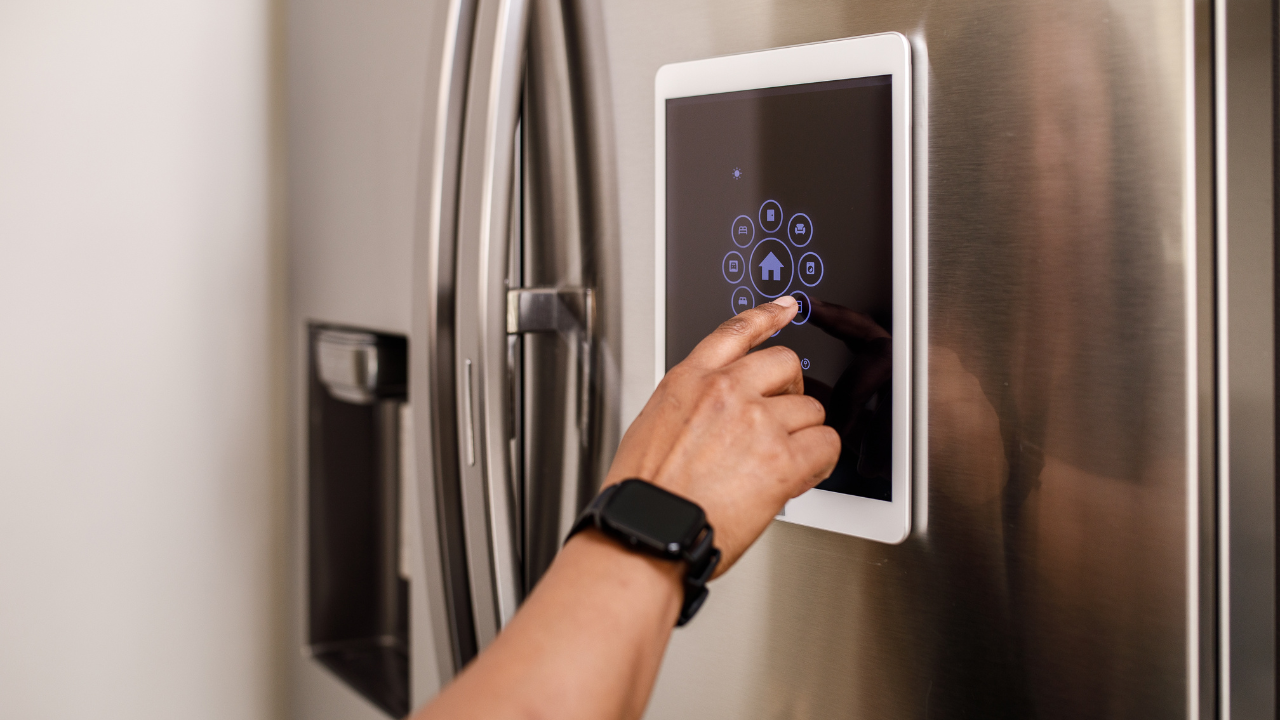
Most people approach a smart kitchen backwards.
They start with gadgets.
A smart fridge here, a connected oven there, maybe a voice assistant on the counter, and suddenly the kitchen is full of devices that technically work—but don’t actually work together.
The result is usually the same: complexity without clarity.
Kitchen automation, when done well, is not about collecting smart devices. It’s about building a system in layers so that each addition removes friction instead of adding it.
The difference is subtle, but it determines whether your kitchen feels simpler or more chaotic.
This guide breaks it down step-by-step so you can build a connected kitchen that actually makes daily life easier—without wasting money on things you won’t use.
Step 1: Start with the voice control layer (your foundation)
Every smart kitchen needs a control layer. Without it, everything else becomes fragmented.
This is where a voice kitchen assistant comes in.
Devices like Amazon Alexa or Google Assistant act as the “hands-free brain” of the kitchen.
Start here because it immediately solves real, daily problems:
- Setting multiple timers while cooking
- Converting measurements instantly
- Adding items to grocery lists mid-recipe
- Following recipes hands-free
- Controlling music or reminders while cooking
This is the lowest-cost, highest-impact entry point into a smart kitchen workflow.
It doesn’t require new appliances. It doesn’t require setup complexity. It simply removes friction from tasks you already do.
Internal link opportunity → Voice kitchen assistants
Step 2: Add a planning system (where most kitchen stress actually lives)
If the voice layer handles “in the moment” cooking, this step handles everything before cooking.
Most kitchen stress doesn’t happen during cooking. It happens when you open the fridge and ask:
“What are we eating tonight?”
This is where meal planning apps quietly become powerful.
A good system can:
- Suggest meals based on preferences
- Build weekly plans automatically
- Generate grocery lists
- Track ingredients you already have
- Reduce decision fatigue
This is one of the most underrated parts of connected kitchen technology, because it removes the mental load of planning—not just execution.
Internal link opportunity → Meal planning apps
Why this step matters more than appliances
People often jump to smart appliances too early. But if you don’t solve planning first, even the best tools won’t feel useful.
A smart oven doesn’t help if you still don’t know what you’re cooking.
Step 3: Add one smart appliance (not five)
This is where most people overspend.
A common mistake in kitchen automation is buying multiple devices at once—smart fridge, smart oven, smart kettle, smart everything.
But the real rule is simple:
Add one appliance that solves a real friction point in your life.
Good starting options:
Smart ovens
Helpful if you cook frequently and want consistent results without constant checking.
Internal link opportunity → Smart ovens
Smart coffee makers
Ideal for daily routine automation and morning consistency.
Internal link opportunity → Smart coffee makers
Smart refrigerators
Useful for households that want inventory awareness or meal optimization.
Internal link opportunity → Smart refrigerators
The key is not capability. It’s usage.
If you won’t use it weekly, it’s not automation—it’s decoration.
Step 4: Build automation routines (where everything starts to connect)
Once you have a voice layer, a planning system, and one appliance, you can start connecting them.
This is where kitchen automation tools begin to matter.
Instead of individual commands, you build routines like:
- “Start cooking dinner” → turns on lights, starts timers, opens recipe
- “Morning kitchen” → brews coffee, sets lighting, reads schedule
- “Grocery mode” → opens list, suggests missing ingredients
This is the difference between isolated smart devices and an actual system.
Internal link opportunity → Kitchen automation tools
Why routines matter more than devices
A smart kitchen isn’t defined by what it has.
It’s defined by what happens automatically.
Without routines, everything still depends on manual coordination. With them, the kitchen begins to anticipate behavior.
Step 5: Expand slowly (this is where most people go wrong)
Once the system is working, it becomes tempting to scale quickly.
This is where most “smart kitchen” setups break.
People add:
- More appliances
- More apps
- More integrations
- More complexity
And suddenly nothing feels simple anymore.
Instead, expansion should be intentional.
Ask one question before adding anything:
“Does this reduce friction, or just add capability?”
Good expansions might include:
- Smart lighting for cooking environments
- Additional voice points in different rooms
- Integrated grocery delivery systems
- Sensor-based cooking tools
But only if they plug into your existing system.
Internal link opportunity → Smart kitchen lighting
The biggest mistake: confusing smart with useful
A smart kitchen is not defined by technology density.
It’s defined by reduction of effort.
Here’s the difference:
- Smart fridge that tracks inventory → useful
- Smart fridge with unused features → waste
- Voice assistant that runs your timers → useful
- Voice assistant you rarely use → clutter
- Automated routines you actually rely on → powerful
- Routines you never trigger → irrelevant
The goal of automated kitchen systems is not to impress. It’s to disappear into the background of your life.
What a well-built smart kitchen actually feels like
When everything is set up correctly, something subtle happens.
You stop managing the kitchen.
Instead:
- You spend less time planning
- You interrupt yourself less during cooking
- You rely less on memory
- You switch between tasks less often
- You feel less “pulled out” of cooking
It doesn’t feel futuristic.
It feels calmer.
That’s the real outcome of kitchen automation when it’s built in layers instead of rushed in a single purchase wave.
Final thought: build for flow, not features
The mistake most people make is thinking a smart kitchen is a destination.
It’s not.
It’s a gradual reduction of friction across everyday routines.
You don’t build it in a weekend. You build it by noticing where your attention gets broken—and fixing those points one by one.
Start small.
Stay consistent.
And only add what earns its place.
Because the best smart kitchen isn’t the one with the most technology.
It’s the one that quietly stops getting in your way.